
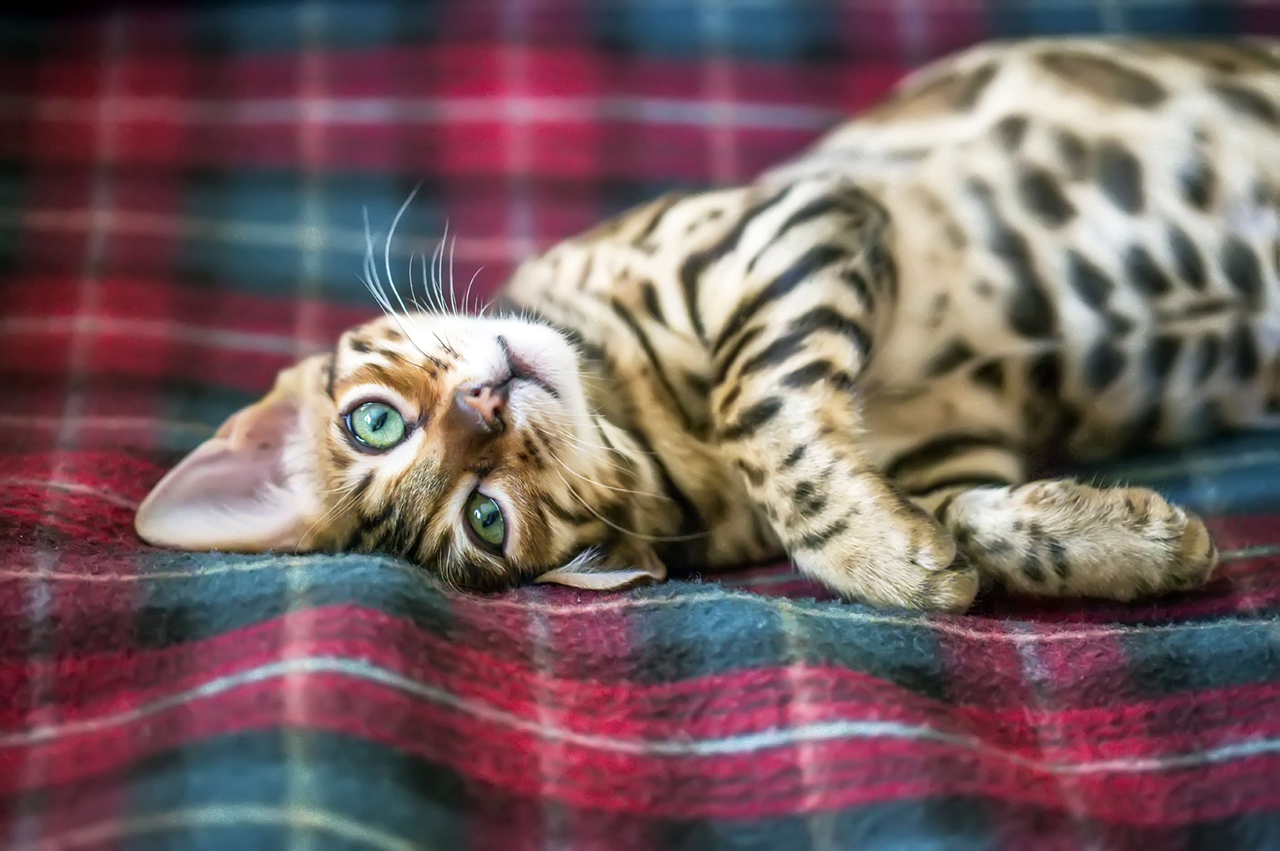
Bengal cats are the wild cards of the cat world — literally. Bred from Asian Leopard Cat hybrids, Bengals are athletic, intelligent, stunningly beautiful, and famously high-maintenance. They're the cat that acts like a dog, fetches toys, demands attention, and gets into everything. But that exotic heritage comes with a price beyond the $2,000–$5,000+ purchase cost: Bengals are predisposed to a unique combination of health issues that can be devastatingly expensive. Hypertrophic cardiomyopathy (HCM) — the silent killer of cats — costs $3,000–$8,000+ to diagnose and manage. Progressive retinal atrophy (PRA-b), a Bengal-specific genetic eye disease, leads to blindness. And chronic gastrointestinal issues — the bane of Bengal ownership — can run $1,000–$4,000+ per year in ongoing treatment. For a breed that costs this much to buy, it's remarkable how many owners skip the insurance that protects their investment.
We compared plans from Australia's major pet insurers, quoting for a 2-year-old Bengal in Sydney, to find the best value cover for this extraordinary breed.
Last updated: March 2026
Quick Comparison: Top Providers for Bengal Cats
Mid-tier plans compared for a 3-year-old male Bengal in Sydney (2000). Prices scraped directly from provider quote tools.
| Provider | Plan | Monthly Premium | Annual Limit | Excess | Benefit % |
|---|---|---|---|---|---|
| Budget Direct 💰🛡️ Lowest Price & Most Comprehensive | Comprehensive | $36.34 | $15,000 | $200 | 80% |
| Pet Circle | Comprehensive | $37.37 | $2,500 | $150 | 70% |
⚠️ Prices quoted March 2026 for a 3-year-old desexed male Bengal in Sydney (2000). Your premium will vary based on age, location, and cover level. Always get a personalised quote from each provider.
💰 = Lowest monthly premium. 🛡️ = Most comprehensive cover, determined by highest annual limit, then highest benefit %, then lowest excess.
⚠️ Premiums are estimates based on a 2-year-old desexed Bengal in Sydney (2000 postcode). Cat insurance is significantly cheaper than dog insurance across the board. Your actual quote will vary by age, location, and cover level. Always get a personalised quote.
Why Bengal Cats Need Comprehensive Insurance
Bengals aren't your average domestic cat — and their health risks aren't average either. Their Asian Leopard Cat ancestry and selective breeding have created a breed with specific genetic vulnerabilities that set them apart from moggies and most other pedigree cats. The good news: cat insurance is considerably cheaper than dog insurance, making comprehensive cover genuinely affordable. The bad news: when things go wrong with a Bengal, they go wrong expensively.
Common Bengal Cat Health Issues & Typical Vet Costs
| Condition | What It Is | Typical Cost |
|---|---|---|
| Hypertrophic Cardiomyopathy (HCM) | Heart muscle thickening — the #1 killer of cats. Bengals have elevated genetic risk, similar to Ragdolls | $3,000–$8,000+ (echocardiograms + ongoing medication) |
| Progressive Retinal Atrophy (PRA-b) | Bengal-specific genetic eye disease causing progressive blindness. DNA test exists but not all breeders screen | $1,000–$3,000 (diagnosis + management) |
| Chronic Gastrointestinal Issues (IBD/IBS) | Chronic vomiting, diarrhoea, sensitive stomach — extremely common in Bengals, often lifelong | $1,000–$4,000+/year (ongoing) |
| Flat-Chested Kitten Syndrome (FCKS) | Chest wall deformity in kittens — Bengal-specific; serious cases need intervention | $1,000–$5,000 |
| Patellar Luxation | Kneecap displacement — more common in Bengals than most cat breeds | $2,000–$5,000 per knee |
| Hip Dysplasia | Unusual in cats but Bengals have a higher incidence than most breeds | $2,000–$6,000 |
| Pyruvate Kinase Deficiency (PK Def) | Genetic enzyme deficiency causing anaemia — DNA test available | $2,000–$5,000+ (diagnosis + management) |
| Urinary Tract Issues (FLUTD/FIC) | Stress-related urinary problems — Bengals' high-energy temperament makes them prone to stress when under-stimulated | $1,000–$5,000 per episode |
| Dental Disease | Periodontal disease and tooth resorption — common in pedigree cats | $1,000–$3,000 (dental surgery) |
| Lymphoma | The most common cancer in cats — pedigree cats may have elevated risk | $3,000–$10,000+ |
The Bengal GI Problem
If there's one condition that defines Bengal ownership, it's chronic gastrointestinal sensitivity. Bengal forums are full of owners sharing stories about the "Bengal belly" — chronic soft stools, vomiting, food sensitivities, and full-blown inflammatory bowel disease (IBD). This isn't occasional upset stomach; for many Bengals, it's a lifelong management condition requiring:
- Prescription diets ($80–$150/month for hydrolysed protein or novel protein foods)
- Regular vet consultations ($100–$250 each)
- Blood panels and faecal testing ($200–$500 per round)
- Medications (prednisolone, metronidazole, B12 injections: $50–$200/month)
- Specialist referral (internal medicine specialist: $300–$600 consultation)
- Ultrasound/endoscopy ($1,000–$3,000 for definitive diagnosis)
Over a Bengal's 12–16 year lifespan, chronic GI issues can easily cost $15,000–$50,000 in total. Sound familiar? It's the same pattern as skin allergies in Staffies — chronic, cumulative, and easy to underestimate until you're deep into it.
HCM: The Silent Threat
Hypertrophic cardiomyopathy deserves special mention because it kills cats without warning. A Bengal can appear perfectly healthy one day and die of heart failure the next. Regular echocardiogram screening ($300–$500 each, recommended annually for at-risk breeds) is the only way to catch it early. If diagnosed, lifelong medication (atenolol, clopidogrel) adds $100–$300/month. Our Ragdoll cat insurance guide covers HCM in detail — the risks and insurance considerations are very similar for Bengals.
Detailed Provider Reviews
Bow Wow Meow
Best for: The highest limit with no sub-limits — handles HCM treatment, chronic GI management, and unexpected emergencies without condition caps
Bow Wow Meow's $30,000 annual limit with no sub-limits is as valuable for Bengal cats as it is for high-risk dog breeds. When your cat could need $8,000 in cardiac care and $3,000 in GI management in the same year, you need an insurer that doesn't cap individual condition categories.
Key features:
- Annual limit: Up to $30,000
- Benefit percentage: Choose 60%, 70%, 80%, or 90%
- No sub-limits — every condition draws from your full annual limit
- GapOnly® claiming: Pay only the gap at participating vets
- Hereditary conditions covered (subject to PDS terms)
Waiting periods:
- Accident: 2 days
- Illness: 30 days
- Pre-existing conditions: Not covered
Pros:
- No sub-limits handles the dual threat of chronic GI + potential cardiac/genetic conditions
- $30,000 limit provides massive headroom for cat insurance (most cats won't hit this)
- GapOnly is great for frequent GI-related vet visits
- Hereditary condition coverage includes HCM and PRA
Cons:
- Premium end of the market (though cat premiums are much lower than dogs)
- Premium pricing may feel excessive for a healthy Bengal — but Bengals aren't always healthy
Get a Quote from Bow Wow Meow →
Pet Insurance Australia (PIA)
Best for: Breed-aware cover with promotional savings
PIA's 2 months free promo makes this a strong value option for Bengal owners. Their breed-specific knowledge extends to cats, and their $20,000 annual limit is more than adequate for most feline health scenarios.
Key features:
- Annual limit: Up to $20,000
- Benefit percentage: Up to 80%
- Hereditary conditions covered (subject to PDS)
- 2 months free promotional pricing
Pros:
- 2 months free saves meaningfully over the policy's life
- Australian-owned with genuine breed knowledge
- $20,000 limit is generous for cat insurance
- Good customer reviews
Cons:
- Lower limit than Bow Wow Meow (though $20,000 handles most cat scenarios)
- No GapOnly-style claiming
Get a Quote from Pet Insurance Australia →
RSPCA Pet Insurance
Best for: Solid comprehensive cover that supports animal welfare
RSPCA Pet Insurance offers reliable coverage for Bengals at competitive pricing. With cat premiums already lower than dog premiums, you can afford comprehensive cover without stretching your budget.
Key features:
- Annual limit: Up to $20,000
- Benefit percentage: Up to 80%
- Portion of premium supports RSPCA
Pros:
- Supports animal welfare programs
- Competitive cat insurance pricing
- Comprehensive hereditary condition coverage
- Good waiting period terms
Cons:
- Fewer online claiming tools than some competitors
- Not the absolute cheapest option
Get a Quote from RSPCA Pet Insurance →
Petcover
Best for: Flexible mid-range cover with multiple plan options
Petcover's three-tier structure lets Bengal owners choose their comfort level. Given how affordable cat insurance already is, upgrading to Comprehensive costs only marginally more than Standard — and it's worth it for a breed with Bengal-level health risks.
Key features:
- Annual limit: Up to $20,000
- Benefit percentage: Up to 80%
- Three plan tiers: Comprehensive, Standard, Accident Only
Pros:
- Competitive cat insurance pricing
- Flexible plan tiers
- Award-winning insurer
Cons:
- Check PDS for sub-limits on ongoing GI conditions
- Lower limit than Bow Wow Meow
Budget Direct ⭐ Lowest Price & Most Comprehensive
Best for: Most affordable option for indoor-only Bengals
Most Bengals are kept indoors (as they should be — they're an expensive, attractive target for theft, and their hunting instinct is devastating for wildlife). Indoor cats have lower accident risk, making Budget Direct's lower annual limit less of a concern. The main risk remains illness — HCM, GI issues, genetic conditions — which are covered.
Key features:
- Annual limit: Up to $12,000
- Benefit percentage: 80%
- $0 excess option
- 15% online discount
Pros:
- Cheapest comprehensive cat insurance option
- $12,000 limit handles most single-condition scenarios
- No excess option available
- Simple, straightforward
Cons:
- $12,000 may be tight if HCM treatment + chronic GI management overlap in the same year
- Fewer customisation options
- Check PDS for sub-limits on ongoing conditions
Get a Quote from Budget Direct →
How We Compared These Plans
We evaluated each insurer based on criteria specifically relevant to Bengal cat owners:
- Hereditary condition coverage — HCM, PRA-b, and PK Deficiency are all hereditary; coverage is essential
- Chronic/ongoing condition coverage — GI issues are Bengal's biggest ongoing expense; the policy must cover the same condition year after year
- Annual limits & sub-limits — cats need less headroom than dogs, but Bengals can generate higher-than-average cat claims
- Premium cost — cat insurance is affordable; the question is how much more value you get by stepping up a tier
- Claiming experience — ease of process for frequent GI-related visits
- Customer reviews — experiences from cat owners specifically
All quotes were obtained for a 2-year-old desexed Bengal in Sydney (postcode 2000) in March 2026 on comprehensive/accident+illness cover.
What to Look for in Bengal Cat Insurance
✅ Must-Haves
- Hereditary & congenital condition coverage — HCM, PRA-b, PK Deficiency, and hip dysplasia all have genetic links. Non-negotiable for Bengals
- Ongoing condition coverage — chronic GI issues and HCM management are lifelong. Your policy must cover the same condition year after year without treating each renewal as a "new" claim period
- No sub-limits on specific conditions — a policy that caps GI claims at $1,000/year is useless when prescription food alone costs that much
- Reasonable annual limit ($15,000+) — cat insurance limits don't need to be as high as dog limits, but Bengals can generate significant claims
⚠️ Watch Out For
- Pre-existing condition exclusions — insure your Bengal kitten as early as possible (8 weeks). GI sensitivity often first appears in the first 1–2 years, and HCM can develop at any age
- "Pedigree cat" surcharges — some insurers charge more for pedigree breeds. Compare quotes carefully
- Dental exclusions — many policies exclude dental disease entirely or have sub-limits. Bengal owners should check this
- Sub-limits on chronic conditions — this is the big one for Bengals. Read the PDS carefully for any caps on ongoing gastrointestinal treatment
- Indoor vs outdoor classification — some insurers offer lower premiums for indoor-only cats. Check if your Bengal qualifies
💡 Pro Tips for Bengal Cat Owners
- Insure from kitten age — GI sensitivity, HCM, and PRA-b can all develop early. Get cover before any vet records exist
- Ask your breeder about genetic testing — reputable Bengal breeders test for PRA-b and PK Deficiency. HCM screening (echocardiogram) should be done on breeding cats. If your breeder hasn't tested, your kitten's risk profile is unknown — insurance is even more critical
- Budget for annual HCM screening — even insured, annual echocardiograms ($300–$500) for at-risk breeds are smart preventive care. Some wellness add-ons may partially cover this
- Don't skip illness cover — Bengals' biggest expenses are illness-related, not accident-related. Accident-only policies won't cover HCM, GI disease, PRA, or cancer
- Keep detailed food/symptom diaries — Bengal GI issues are notoriously hard to diagnose. Detailed records of food trials, symptoms, and responses help vets (and insurers) understand your cat's condition
- Cat insurance is cheap — go comprehensive — the price difference between accident-only and comprehensive cover for cats is often just $20–$40/month. For a breed like the Bengal, comprehensive is a no-brainer
Frequently Asked Questions
How much does pet insurance cost for a Bengal cat in Australia?
Expect to pay between $30 and $85 per month ($360–$1,020/year) for comprehensive cover, depending on age, location, and plan level. Cat insurance is significantly cheaper than dog insurance across all breeds. Bengal premiums are slightly higher than domestic shorthair/moggy premiums due to pedigree breed classification.
Does pet insurance cover HCM in Bengal cats?
Yes — most comprehensive policies cover hypertrophic cardiomyopathy as long as it develops after the waiting period (typically 30 days for illness). HCM is the most common heart disease in cats and has a genetic link in Bengals and Ragdolls. Insure early — once echocardiogram results show any abnormality, it becomes pre-existing.
Does pet insurance cover chronic digestive issues in Bengals?
Yes — comprehensive policies cover gastrointestinal conditions including IBD, provided they develop after the waiting period. The critical factor is ongoing condition coverage: ensure your policy covers the same GI condition year after year, as Bengal digestive issues are typically chronic and lifelong. Check for sub-limits.
Is pet insurance worth it for an indoor Bengal cat?
Absolutely. Indoor Bengals have lower accident risk but identical illness risk to outdoor cats. HCM, PRA-b, GI disease, cancer, and urinary issues don't care whether your cat goes outside. Indoor cats also face specific risks like urinary tract disease (linked to stress and inactivity) and dental disease. Given how affordable cat insurance is, skipping it makes little sense for a breed with Bengal-level health predispositions.
What's the best age to insure a Bengal cat?
As early as possible — from 8 weeks. HCM can develop at any age (though it's most commonly detected between ages 2–6), GI issues often emerge in the first 1–2 years, and PRA-b is progressive. Early insurance ensures nothing is pre-existing.
Are Bengals more expensive to insure than regular domestic cats?
Slightly. Bengals are classified as a pedigree breed, which typically adds a small premium compared to domestic shorthairs. However, the difference is usually modest — perhaps $5–$15/month more. Given their higher health risks, the slight premium increase is well justified.
Can I get pet insurance if my Bengal already has GI issues?
You can still get insurance, but existing gastrointestinal conditions will be excluded as pre-existing. The policy will cover everything else — HCM, PRA, accidents, cancer, urinary issues. This is why early insurance matters so much for this GI-sensitive breed.
What's the average lifespan of a Bengal cat?
Bengals typically live 12–16 years in Australia with good care. This is similar to most domestic cats. The longer lifespan means chronic conditions like GI disease generate costs over many years — 10+ years of prescription food and medication adds up significantly.
The Bottom Line
For Bengal cat owners, Bow Wow Meow is our top recommendation — the $30,000 annual limit with no sub-limits provides the best safety net for a breed that can develop expensive cardiac conditions, chronic GI disease, and genetic eye problems. And because cat insurance premiums are so much lower than dog premiums, the cost of top-tier cover is genuinely affordable.
Pet Insurance Australia (with 2 months free) and RSPCA Pet Insurance are excellent alternatives if you want to save on premiums while still getting comprehensive hereditary condition coverage. Budget Direct works for cost-conscious owners, particularly for indoor-only Bengals with health-tested parents.
The bottom line for Bengal owners is simple: cat insurance is cheap, Bengals are not. A $2,000–$5,000 kitten with a $50/month insurance policy is far better protected than one without — and when HCM, chronic GI disease, or PRA-b strikes, you'll be grateful you didn't gamble on your exotic cat's health.
Pet Cover Guide is reader-supported. When you click our links, we may earn a commission at no extra cost to you. This doesn't influence our ratings — we recommend what we'd choose for our own pets. Read our full editorial policy.