
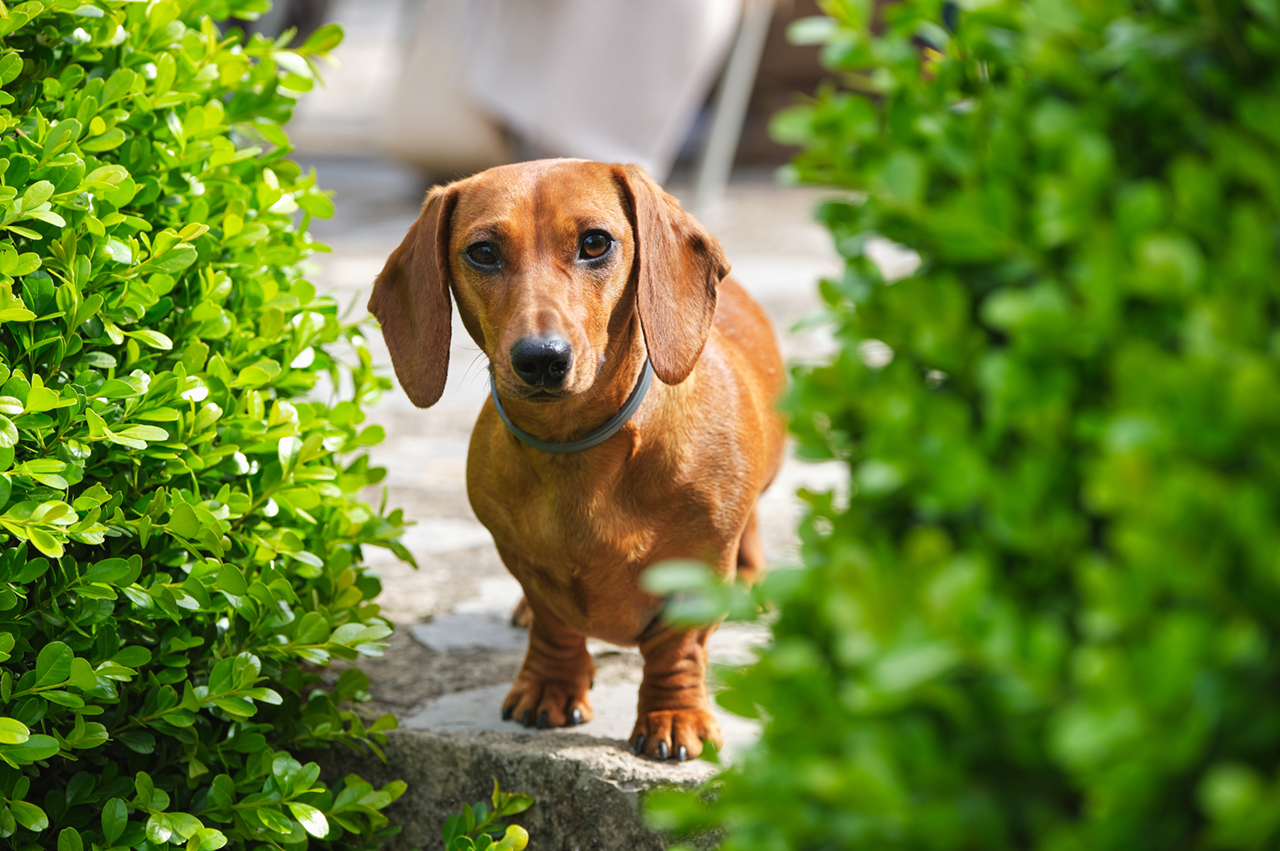
Dachshunds — sausage dogs, doxies, wiener dogs — whatever you call them, Australians are obsessed. Those short legs, long bodies, and absurdly big personalities have made them one of the most popular small breeds in the country. But that adorable elongated body comes at a devastating cost: Intervertebral Disc Disease (IVDD). Dachshunds are the single most affected breed, with studies suggesting up to 1 in 4 Dachshunds will experience some form of IVDD in their lifetime. When a disc ruptures and presses on the spinal cord, your sausage dog can go from running around the park to paralysed in hours — and the emergency surgery to fix it costs $5,000–$15,000+. That's not a typo. IVDD surgery is one of the most expensive emergency procedures in veterinary medicine, and Dachshunds need it more than any other breed on earth.
We compared plans from Australia's major pet insurers, quoting for a 2-year-old Dachshund in Sydney, to find the best value cover for this breed — with a specific focus on which policies actually cover IVDD and carry an annual limit high enough to handle a full spinal surgery. For a broader view of premiums, see our full guide to how much pet insurance costs in Australia.
Last updated: July 2026
Quick Comparison: Top Providers for Dachshunds
| Provider | Monthly Est. | Annual Limit | Excess | Benefit % | IVDD Covered | Waiting (Illness) | Our Take |
|---|---|---|---|---|---|---|---|
| Bow Wow Meow ⭐ | ~$100–150 | Up to $30,000 | $0–$500 | Up to 90% | ✅ Yes | 30 days | Best overall — $30,000 limit critical for IVDD surgery + rehab |
| PetInsuranceAustralia | ~$90–130 | Up to $20,000 | $0–$200 | Up to 80% | ✅ Yes | 30 days | 2 months free promo, genuine breed expertise |
| Petcover | ~$80–120 | Up to $20,000 | $100–$300 | Up to 80% | ✅ Yes | 30 days | Good mid-range value with flexible tiers |
| RSPCA Pet Insurance | ~$75–115 | Up to $20,000 | $0–$200 | Up to 80% | ✅ Yes | 30 days | Supports animal welfare, solid cover |
| Budget Direct | ~$60–95 | Up to $12,000 | $0 fixed | 80% | ✅ Yes | 30 days | Cheapest option — but $12K may not cover full IVDD surgery + aftercare |
⚠️ Premiums are estimates based on a 2-year-old desexed Miniature Dachshund in Sydney (2000 postcode). Your actual quote will vary by age, location, coat type, and cover level. Always get a personalised quote.
Why Dachshunds Need Comprehensive Insurance
Let's not sugarcoat it: Dachshunds are an expensive breed to own when things go wrong, and things go wrong with their backs more than any other breed. IVDD is to Dachshunds what skin allergies are to Staffies — except instead of years of gradual costs, IVDD hits like a freight train with a single bill that can exceed $15,000.
Common Dachshund Health Issues & Typical Vet Costs
| Condition | What It Is | Typical Cost |
|---|---|---|
| Intervertebral Disc Disease (IVDD) | Disc herniation compressing the spinal cord — THE defining Dachshund health crisis. Can cause sudden paralysis. | $5,000–$15,000+ (surgery + rehab) |
| Obesity | Dachshunds gain weight easily, and excess weight on that long spine dramatically increases IVDD risk | $1,000–$3,000+/year (management) |
| Dental Disease | Small breeds are prone to overcrowded teeth, plaque buildup, and tooth resorption | $800–$3,000+ per dental |
| Progressive Retinal Atrophy (PRA) | Inherited degenerative eye disease causing progressive blindness | $1,000–$3,000 (diagnosis + management) |
| Cushing's Disease | Overproduction of cortisol — causes excessive thirst, weight gain, and skin issues | $2,000–$5,000+/year (ongoing treatment) |
| Patellar Luxation | Kneecap dislocation — common in small breeds | $1,500–$4,000 per knee |
| Epilepsy | Seizure disorder requiring lifelong medication | $1,500–$3,000+/year (ongoing) |
| Lafora Disease | Late-onset epilepsy specific to Miniature Wirehaired Dachshunds | $1,500–$3,000+/year (management) |
| Acanthosis Nigricans | Skin darkening and thickening — primarily affects Dachshunds | $500–$1,500 (management) |
| Hypothyroidism | Underactive thyroid causing weight gain and lethargy | $500–$1,500/year (ongoing medication) |
The IVDD Problem — Understanding the Risk
IVDD is the reason Dachshunds need insurance more urgently than almost any other breed. Here's what every Dachshund owner needs to understand:
What happens: The discs between the vertebrae in your Dachshund's spine degenerate and can suddenly herniate (bulge or rupture), pressing on the spinal cord. This causes pain, weakness, loss of coordination, and in severe cases, complete paralysis of the hind legs — sometimes within hours.
How common: Studies estimate 19–24% of Dachshunds will experience clinically significant IVDD. That's roughly 1 in 4. No other breed comes close to this rate.
The cost breakdown of IVDD:
- Emergency vet visit and imaging (MRI/CT): $2,000–$4,000
- Surgery (hemilaminectomy): $5,000–$10,000
- Post-surgical hospitalisation: $1,000–$3,000
- Rehabilitation (hydrotherapy, physiotherapy): $2,000–$5,000 over 3–6 months
- Wheelchair/cart (if surgery isn't fully successful): $300–$800
- Total for a severe IVDD episode: $8,000–$15,000+
The critical window: IVDD is a genuine emergency. If your Dachshund loses feeling in their hind legs, you have roughly 24–48 hours to get them into surgery for the best chance of recovery. This is not a condition where you can shop around for quotes or wait and see — you need to authorise $10,000+ in emergency treatment immediately. Without insurance, many owners face the impossible choice between financial devastation and their dog's mobility.
It can happen more than once. IVDD isn't a one-disc problem. Dachshunds have multiple vulnerable discs, and a dog that's had one IVDD episode is at higher risk of another. This is why annual limits matter — you need cover that handles potential repeat events.
The Weight Factor
Obesity and IVDD are directly linked in Dachshunds. Every extra kilogram on that elongated spine increases disc pressure and IVDD risk. An overweight Dachshund isn't just unhealthy — they're a ticking time bomb for a $10,000+ emergency. Keeping your Dachshund lean is the single most important thing you can do to reduce their IVDD risk, but even lean, fit Dachshunds can rupture discs due to genetics alone.
Which Pet Insurance Covers IVDD in Australia?
This is the question that matters most for Dachshund owners, so let's answer it directly: all of Australia's major comprehensive (accident + illness) pet insurance policies cover IVDD — including diagnostics (MRI/CT), spinal surgery, hospitalisation, and rehabilitation. There is no major Australian insurer that specifically excludes IVDD as a named condition on a comprehensive plan.
But "covered" and "covered adequately" are two very different things. The real question isn't whether a policy covers IVDD — it's whether it covers it without running out of money mid-treatment. Here's what actually determines whether your IVDD claim gets paid in full.
The 5 things that decide if your IVDD claim is actually covered
| Factor | Why it matters for IVDD | What to look for |
|---|---|---|
| Cover type | IVDD is an illness, not an accident — even though it strikes suddenly. Accident-only policies will not cover it. | A comprehensive accident + illness policy. This is non-negotiable. |
| Annual limit | A single severe IVDD episode (surgery + MRI + hospitalisation + rehab) can hit $15,000+. A $12,000 limit can be exhausted by one event. | $20,000 minimum, $30,000 ideal to leave room for repeat episodes or a second condition. |
| No surgical sub-limits | Some policies advertise a big annual limit but quietly cap surgery or specialist referral at a lower figure — useless for a $10,000 hemilaminectomy. | Confirm the full annual limit applies to surgery (no separate surgical/specialist cap). |
| Rehabilitation cover | Post-surgery recovery needs 8–12 weeks of hydrotherapy/physio ($2,000–$5,000). Some policies cover the surgery but not the rehab. | Explicit rehabilitation / hydrotherapy inclusion. |
| No pre-existing exclusion | Once any back issue, gait abnormality or disc sensitivity is in your vet records, IVDD becomes pre-existing and is excluded permanently. | Insure before any spinal symptoms appear — ideally as a puppy. |
Does pet insurance cover IVDD surgery specifically?
Yes. Spinal surgery for IVDD (a hemilaminectomy, typically $5,000–$10,000) is covered under comprehensive illness cover, provided:
- You took out the policy before any symptoms or vet notes about your dog's back, and
- Symptoms first appeared after your illness waiting period ended (typically 30 days), and
- Your annual limit and any surgical sub-limit are high enough to cover the full bill.
This is exactly why we rate annual limit as the single most important feature for this breed. A policy that covers IVDD but caps out at $12,000 can leave you paying thousands out of pocket on a single episode — technically "covered," but not enough.
Best policies for IVDD cover (2026)
Based on the criteria above, these are the strongest IVDD policies for Dachshunds right now:
- Bow Wow Meow — ⭐ best for IVDD. $30,000 annual limit, no condition sub-limits, GapOnly claiming (critical in an emergency). Genuinely covers a full IVDD episode plus a second condition in the same year.
- Pet Insurance Australia — $20,000 limit covers most single IVDD episodes; 2-months-free promo helps offset the premium.
- RSPCA / Petcover — $20,000 limits, solid surgical cover, good middle-ground options.
- Budget Direct — cheapest, but the $12,000 limit is the one to watch for IVDD: a severe episode can exhaust it. Fine for budget-conscious owners who accept that ceiling.
The full breakdown is in the provider reviews below.
Detailed Provider Reviews
Bow Wow Meow ⭐ Editor's Pick
Best for: $30,000 annual limit gives genuine IVDD protection — critical when surgery + rehab can hit $15,000+
For Dachshund owners, the annual limit is everything. IVDD surgery plus rehabilitation can easily reach $10,000–$15,000 — and that's for one disc. If your Dachshund needs a second surgery, or has IVDD plus another health issue in the same year, a $12,000 or $20,000 limit could leave you exposed. Bow Wow Meow's $30,000 ceiling provides genuine breathing room.
Key features:
- Annual limit: Up to $30,000 (highest among major AU insurers)
- Benefit percentage: Choose 60%, 70%, 80%, or 90%
- No sub-limits on specific conditions — your full annual limit applies to IVDD claims
- GapOnly® claiming: Pay only the gap at the vet — critical during emergency IVDD treatment
- myPetPass® included: 24/7 online vet access + discounts on pet meds
- Hereditary conditions covered (subject to PDS terms)
Waiting periods:
- Accident: 2 days
- Illness: 30 days
- Cruciate ligament: 6 months
- Pre-existing conditions: Not covered
Pros:
- $30,000 limit can handle IVDD surgery, rehabilitation, AND another condition in the same year
- GapOnly is a lifesaver during IVDD emergencies — you don't want to be arranging $10,000 upfront at 2am in an emergency vet
- No sub-limits mean full cover applies to spinal surgery
- Highest benefit percentage option (90%) maximises your payout
Cons:
- Premium end of the market
- 6-month cruciate wait is standard but worth noting
Get a Quote from Bow Wow Meow →
Pet Insurance Australia (PIA)
Best for: Breed-specialist knowledge and promotional pricing
PIA's 2 months free promotional offer provides meaningful savings for Dachshund owners. Their breed-specific content demonstrates genuine understanding of IVDD risks, and their $20,000 annual limit handles most single-episode IVDD scenarios comfortably.
Key features:
- Annual limit: Up to $20,000
- Benefit percentage: Up to 80%
- Hereditary conditions covered (subject to PDS)
- Breed-specific health resources showing real IVDD awareness
Pros:
- 2 months free promotional pricing
- Australian-owned and operated
- $20,000 limit covers most IVDD surgeries + rehab
- Good customer reviews for surgical claims
Cons:
- If IVDD + another major condition hit the same year, $20,000 could get tight
- No GapOnly-style instant claiming for emergencies
Get a Quote from Pet Insurance Australia →
Petcover
Best for: Good value mid-range cover with flexible plan tiers
Petcover offers solid comprehensive cover at a competitive price. Three plan tiers let you scale protection to your budget. A sensible choice for Dachshund owners who want decent IVDD protection without paying top-tier premiums.
Key features:
- Annual limit: Up to $20,000
- Benefit percentage: Up to 80%
- Three plan tiers: Comprehensive, Standard, Accident Only
- Award-winning (Canstar, Finder)
Pros:
- Competitive pricing for Dachshunds
- Flexible plan tiers
- Good claims track record for surgical claims
Cons:
- Check PDS for sub-limits on spinal/surgical conditions
- Lower limit than Bow Wow Meow
RSPCA Pet Insurance
Best for: Supporting animal welfare while protecting your Dachshund
RSPCA-branded insurance (underwritten by Hollard) delivers comprehensive cover while supporting RSPCA programs. A good all-round option with solid surgical coverage.
Key features:
- Annual limit: Up to $20,000
- Benefit percentage: Up to 80%
- Portion of premium supports RSPCA
Pros:
- Supports animal welfare with every premium payment
- Comprehensive cover including hereditary conditions
- $20,000 limit handles most IVDD scenarios
Cons:
- Not the cheapest option
- Limited online claiming tools compared to Bow Wow Meow
Get a Quote from RSPCA Pet Insurance →
Budget Direct
Best for: Lowest premiums — but the $12,000 limit is a real concern for Dachshunds
Budget Direct is the most affordable option, but for Dachshunds specifically, we have reservations. A severe IVDD episode with surgery, hospitalisation, and rehabilitation can exceed $12,000 — meaning you could hit your annual limit on a single incident. If your Dachshund is young, lean, and you're willing to accept the limit risk, it's a viable budget choice. But for this breed more than most, the extra $30–50/month for a higher limit insurer could save you thousands.
Key features:
- Annual limit: Up to $12,000
- Benefit percentage: 80%
- $0 excess option
- 15% online discount
Pros:
- Cheapest comprehensive option for Dachshunds
- No excess option available
- Simple, straightforward plans
Cons:
- $12,000 annual limit is a genuine risk for IVDD — surgery alone can cost $10,000+, leaving little room for rehab or other conditions
- Fewer plan customisation options
- Check PDS for sub-limits
Get a Quote from Budget Direct →
How We Compared These Plans
We evaluated each insurer based on criteria specifically relevant to Dachshund owners:
- Annual limit adequacy for IVDD — the single most critical factor. Can the policy cover a full IVDD surgery, rehabilitation, and still have room for other conditions?
- Hereditary condition coverage — IVDD has strong hereditary links in Dachshunds
- Emergency claiming experience — IVDD is an emergency. How easy is it to authorise treatment fast?
- Chronic condition coverage — Cushing's disease, dental issues, and epilepsy are ongoing costs
- Premium cost — balanced against actual protection level
- Waiting periods — standard 30 days for illness across all providers
All quotes were obtained for a 2-year-old desexed Miniature Dachshund in Sydney (postcode 2000) in March 2026 on comprehensive/accident+illness cover.
What to Look for in Dachshund Insurance
✅ Must-Haves
- Adequate annual limit ($20,000+ minimum, $30,000 ideal) — IVDD surgery + rehab can hit $15,000. This is the non-negotiable for Dachshund insurance
- Hereditary & congenital condition coverage — IVDD in Dachshunds is directly linked to their genetic body structure
- No sub-limits on surgical or spinal treatment — some policies cap surgical claims separately from the main annual limit
- Rehabilitation coverage — post-IVDD recovery requires weeks of hydrotherapy and physiotherapy. Make sure rehab is covered under your plan
⚠️ Watch Out For
- Pre-existing condition exclusions — insure your Dachshund puppy early. If your vet notes any back sensitivity, gait abnormality, or previous disc issue, spinal claims could be excluded
- Waiting periods for spinal/back conditions — most insurers have a 30-day illness wait, but check for any additional back-specific waiting periods
- Sub-limits on surgical procedures — a policy might have a $20,000 annual limit but cap surgical claims at $5,000 — useless for IVDD
- Rehabilitation exclusions — some policies cover surgery but not post-operative rehabilitation, which is essential for IVDD recovery
- Bilateral/related condition clauses — if one disc herniates, some insurers might classify future disc issues as "related" to the first
💡 Pro Tips for Dachshund Owners
- Insure as a puppy (8–12 weeks) — IVDD can strike as early as 2–3 years old. Get cover before any spinal symptoms appear
- Keep your Dachshund lean — this cannot be overstated. Every extra gram on that spine increases IVDD risk. An overweight Dachshund is a back surgery waiting to happen
- Prevent jumping — use ramps for couches, beds, and cars. Avoid stairs where possible. Jumping is the most common trigger for disc herniation in Dachshunds
- Prioritise annual limit over premium savings — a $30/month saving on premiums is meaningless when you're facing a $15,000 IVDD bill. For Dachshunds, spend more on your limit
- Check rehabilitation coverage — IVDD recovery often requires 8–12 weeks of hydrotherapy and physiotherapy. This costs $2,000–$5,000 and is as important as the surgery itself
- Know the emergency signs — reluctance to move, yelping when picked up, dragging hind legs, loss of bladder control. IVDD is a time-critical emergency. Hours matter. Know your nearest emergency vet
- Consider a second opinion before surgery — not all IVDD cases require surgery. Mild cases (Grade 1–2) can sometimes be managed conservatively with strict rest and medication ($500–$2,000)
Frequently Asked Questions
How much does pet insurance cost for a Dachshund in Australia?
Expect to pay between $60 and $150 per month ($720–$1,800/year) for comprehensive cover, depending on your dog's age, size (miniature vs standard), location, and plan level. Dachshunds are moderately priced to insure — their IVDD risk is well-known, but they're small dogs with fewer emergency costs outside of spinal issues.
Does pet insurance cover IVDD (Intervertebral Disc Disease)?
Yes — comprehensive policies cover IVDD including diagnostics (MRI/CT), surgery, hospitalisation, and rehabilitation, provided symptoms first appear after the waiting period (typically 30 days for illness). IVDD is considered an illness, not an accident, even if it appears suddenly. Insure your Dachshund before any back symptoms develop.
Does pet insurance cover back surgery for Dachshunds?
Yes — spinal surgery (hemilaminectomy) for IVDD is covered under comprehensive illness cover. The key is ensuring your annual limit is high enough to cover the full cost — surgery ($5,000–$10,000) plus rehab ($2,000–$5,000) can exceed $12,000 for a single episode.
Which pet insurance covers IVDD in Australia?
All major Australian comprehensive (accident + illness) insurers cover IVDD — Bow Wow Meow, Pet Insurance Australia, RSPCA, Petcover and Budget Direct included. None of them exclude IVDD by name on a comprehensive plan. The difference is the annual limit: Bow Wow Meow's $30,000 limit gives the most headroom for a full surgery-plus-rehab episode, while Budget Direct's $12,000 entry limit can be exhausted by a single severe case. Accident-only policies do not cover IVDD, because it's classed as an illness even when it strikes suddenly. The critical rule: take out cover before any back symptoms or vet notes exist, or IVDD will be treated as a pre-existing exclusion.
How much does IVDD surgery cost in Australia?
A single IVDD episode typically totals $8,000–$15,000+: emergency consult and MRI/CT imaging ($2,000–$4,000), the hemilaminectomy surgery itself ($5,000–$10,000), post-surgical hospitalisation ($1,000–$3,000), and rehabilitation over 3–6 months ($2,000–$5,000). Mild (Grade 1–2) cases that can be managed conservatively with strict rest and medication are cheaper at $500–$2,000 — but you can't know which category your dog falls into until the emergency happens, which is exactly why adequate cover matters.
Is pet insurance worth it for a Dachshund?
Absolutely. Dachshunds have one of the strongest cases for pet insurance of any breed. With a 1-in-4 lifetime IVDD risk and surgery costs of $5,000–$15,000+, the question isn't whether insurance is worth it — it's whether you can afford not to have it. Even at $150/month, you'd pay $1,800/year for coverage that could save you $15,000 in a single emergency. For more on the general value proposition, see our guide: Is Pet Insurance Worth It in Australia?
What's the best age to insure a Dachshund?
As early as possible — most insurers accept puppies from 8 weeks. IVDD can first present as early as 2–3 years old, and some Dachshunds show disc calcification even younger. Once any spinal issue is noted in vet records, it becomes a pre-existing condition that may be excluded permanently.
Are Miniature Dachshunds more expensive to insure than Standard Dachshunds?
Premiums are generally similar, though some insurers may price differently based on size. Miniature Dachshunds may actually have a slightly higher IVDD risk per some studies, but both varieties need the same level of spinal coverage.
What's the average lifespan of a Dachshund?
Dachshunds typically live 12–16 years in Australia — one of the longest-lived breeds. This is great news but means chronic conditions like Cushing's disease or dental issues generate costs over many years. It also means there's a long window during which IVDD can strike.
Can I get pet insurance if my Dachshund has already had IVDD?
You can still get insurance, but previous IVDD episodes and potentially all spinal/back conditions will be excluded as pre-existing. The policy will cover everything else — dental, eyes, other illnesses, and accidents. This is why early insurance is critical for Dachshunds.
The Bottom Line
For Dachshund owners, Bow Wow Meow is our top recommendation — and it's not close. The $30,000 annual limit is the difference between full IVDD coverage and potentially running out of cover mid-treatment. When IVDD surgery, MRI, hospitalisation, and 3 months of rehabilitation can total $15,000+, a $12,000 limit leaves you exposed and a $20,000 limit leaves you tight. Bow Wow Meow's GapOnly claiming is also a genuine advantage during IVDD emergencies — at 2am in an emergency vet, you don't want to be finding $10,000 upfront.
Pet Insurance Australia is a strong second choice, especially with their 2-months-free promotion. The $20,000 limit covers most single IVDD episodes comfortably. Budget Direct is harder to recommend for Dachshunds specifically — the $12,000 limit is a real concern when the breed's defining health risk regularly exceeds that amount.
The one thing you must do: insure your Dachshund before any back issues appear. IVDD is the breed's Achilles heel, it can strike from age 2 onwards, and once it's in your vet records, it's a pre-existing condition. With 1 in 4 Dachshunds affected, the odds aren't in your favour without cover.
Related breed guides:
- Best Pet Insurance for French Bulldogs
- Best Pet Insurance for Golden Retrievers
- Best Pet Insurance for Cavalier King Charles Spaniels
- Best Pet Insurance for Staffies
- Best Pet Insurance for Labradors
- Best Pet Insurance for German Shepherds
- Best Pet Insurance for Rottweilers
- Best Pet Insurance for Ragdoll Cats
- Best Pet Insurance for Bengal Cats
- Best Pet Insurance for British Shorthair Cats
- Best Pet Insurance for Poodles & Doodle Crosses
Informational guides:
Pet Cover Guide is reader-supported. When you click our links, we may earn a commission at no extra cost to you. This doesn't influence our ratings — we recommend what we'd choose for our own pets. Read our full editorial policy.
Disclaimer: This article is general information only and does not constitute financial advice. Always read the Product Disclosure Statement (PDS) before purchasing any insurance product.
Last reviewed: June 2026. Premiums are indicative and based on a 2-year-old desexed Miniature Dachshund in Sydney (postcode 2000) — always get a personalised quote for your dog.