
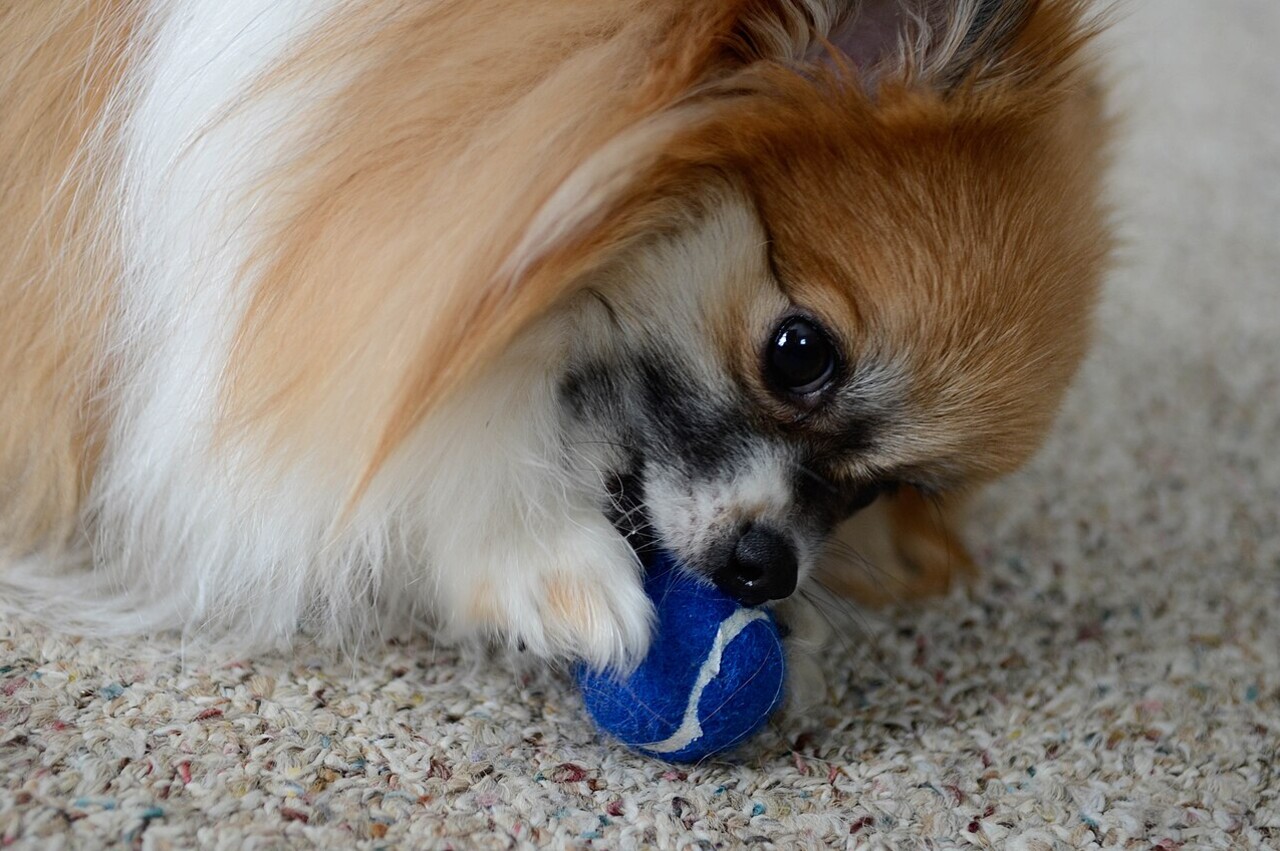
Pomeranians are proof that big personalities come in tiny packages. These fluffy, fox-faced charmers weigh just 1.5–3.5 kg but carry themselves like they own the room — and, frankly, they usually do. Originally bred down from large sled dogs (yes, really — they're related to Huskies), Pomeranians have been a favourite of royalty, celebrities, and everyday Australians alike. They're alert, loyal, endlessly entertaining, and absolutely convinced they're a Great Dane.
But beneath that glorious double coat and bold attitude lies a breed with some serious health vulnerabilities. Pomeranians are genetically predisposed to luxating patella (kneecaps that slip out of place), collapsing trachea, dental disease, and a range of eye conditions — all of which can generate vet bills that far exceed what you'd expect for such a small dog. Luxating patella surgery runs $2,500–$5,000 per knee. Tracheal stent placement? $5,000–$10,000. Even routine dental extractions under anaesthesia can hit $1,500–$3,000. For a dog that fits in your handbag, the bills are anything but pocket-sized.
We compared real quotes from major Australian pet insurers for a 3-year-old Pomeranian in Sydney to find the best cover for this breed's specific health risks.
Last updated: March 2026
Quick Comparison: Top Providers for Pomeranians
| Provider | Monthly Premium | Annual Limit | Excess | Benefit % | Our Take |
|---|---|---|---|---|---|
| Budget Direct ⭐ | ~$32–$62 | $12,000–$25,000 | $100–$200 | 80% | Best value — cheapest comprehensive cover for Poms |
| Bow Wow Meow | ~$76–$228 | $10,000–$30,000 | $0–$500 | 70–90% | Best flexibility — widest range of plan options with GapOnly |
⚠️ Premiums are based on quotes for a 3-year-old desexed male Pomeranian in Sydney (2000 postcode), sourced March 2026. Your actual quote will vary by age, location, and cover level. Always get a personalised quote.
Why Pomeranians Need Insurance
Don't let their size fool you — Pomeranians are one of the more expensive toy breeds to own from a veterinary perspective. Their compact skeletal structure, tiny jaws, and delicate trachea create a perfect storm of breed-specific conditions that are both common and costly.
The financial case for insuring a Pomeranian is clear: most Poms will face at least one major orthopaedic, dental, or respiratory issue in their lifetime, and many will face several. At 12–16 years of age (one of the longest lifespans of any breed), that's a lot of years for health issues to accumulate.
Common Pomeranian Health Issues & Typical Vet Costs
| Condition | What It Is | Typical Cost |
|---|---|---|
| Luxating Patella | Kneecap slips out of its groove — the single most common Pomeranian health issue. Graded 1–4 by severity. Grades 3–4 require surgery. Often bilateral (both knees). | $2,500–$5,000 per knee |
| Dental Disease | Tiny jaws = overcrowded teeth = plaque, decay, and gum disease. Most Poms need dental work by age 3–4. Multiple extractions are common. | $800–$3,000 per dental procedure |
| Collapsing Trachea | The cartilage rings supporting the windpipe weaken and collapse, causing a distinctive "honking" cough. Progressive condition — mild cases managed medically, severe cases may need tracheal stent surgery. | $500–$2,000/year (medical management); $5,000–$10,000 (stent surgery) |
| Alopecia X (Black Skin Disease) | Unexplained hair loss and skin darkening, particularly common in Pomeranians. Primarily cosmetic but can indicate underlying hormonal issues. | $500–$3,000 (diagnosis + ongoing treatment) |
| Cataracts | Lens clouding causing vision impairment. Can be hereditary in Pomeranians. Surgery is the only effective treatment. | $3,000–$6,000 per eye |
| Progressive Retinal Atrophy (PRA) | Hereditary degeneration of the retina leading to gradual blindness. No cure, but early detection helps manage quality of life. | $1,000–$3,000 (diagnosis + management) |
| Hypoglycaemia | Dangerously low blood sugar — particularly common in Pomeranian puppies and small adults. Can cause seizures and collapse. | $500–$3,000 per emergency episode |
| Heart Disease (Patent Ductus Arteriosus, MVD) | Congenital heart defects and mitral valve disease are overrepresented in Pomeranians. MVD is progressive and often diagnosed in middle age. | $3,000–$8,000 (diagnosis + ongoing medication); $10,000–$15,000 (surgery if applicable) |
| Legg-Calvé-Perthes Disease | Degeneration of the femoral head (hip joint) due to loss of blood supply. Common in toy breeds. Usually requires surgery. | $3,000–$6,000 |
| Hypothyroidism | Underactive thyroid — causes weight gain, lethargy, skin problems. Requires lifelong medication. | $300–$800/year (ongoing medication + blood tests) |
| Seizure Disorders | Pomeranians have a higher incidence of idiopathic epilepsy than many breeds. Requires ongoing medication and monitoring. | $1,000–$5,000/year (medication + specialist consultations) |
The Luxating Patella Problem
If there's one condition that defines the Pomeranian ownership experience from a veterinary perspective, it's luxating patella. Studies suggest up to 30% of Pomeranians will develop this condition to some degree. The kneecap (patella) slides out of its normal groove, causing intermittent lameness — you'll notice your Pom suddenly skipping on a back leg, then walking normally again seconds later.
Here's what Pomeranian owners typically face:
- Grade 1–2: Patella pops in and out but relocates spontaneously. Managed conservatively with weight management and joint supplements. Monitoring costs $200–$500/year.
- Grade 3–4: Patella is permanently or frequently displaced. Surgery is the only option. A tibial tuberosity transposition or trochleoplasty costs $2,500–$5,000 per knee.
- Bilateral cases: Many Poms develop luxating patella in both knees — potentially $5,000–$10,000 in surgical costs.
- Post-surgical care: Rehabilitation, follow-up X-rays, and pain management add $500–$1,500.
Over a 14-year lifespan, a Pomeranian with bilateral luxating patella requiring surgery could cost $6,000–$12,000 for this single condition alone. Insurance that covers orthopaedic conditions without breed-specific exclusions is non-negotiable for this breed.
The Dental Disaster
Pomeranians have 42 adult teeth crammed into a jaw designed for about 20. The result? Overcrowding, plaque accumulation, gum disease, tooth root abscesses, and early tooth loss. Most Pomeranians need their first professional dental cleaning by age 2–3, and many need multiple extractions by age 5–6.
Here's the financial reality:
- Professional dental cleaning under anaesthesia: $400–$800
- Dental cleaning + extractions (5–10 teeth): $800–$2,000
- Complex extractions (surgical, multiple roots): $1,500–$3,000
- Frequency: Every 12–24 months for most Poms
Over a lifetime, dental care alone can cost $5,000–$20,000. The critical insurance consideration: many pet insurance policies exclude routine dental cleaning but cover dental illness and accident-related dental work. Some policies specifically cover periodontal disease requiring extraction. Read the PDS carefully and understand exactly what "dental" means in your policy.
The Collapsing Trachea
That distinctive "goose honk" cough that many Pom owners learn to recognise is often the first sign of tracheal collapse — a progressive condition where the cartilage rings supporting the windpipe weaken and flatten. It's particularly common in toy breeds and significantly overrepresented in Pomeranians.
- Mild cases (Grade 1–2): Managed with cough suppressants, anti-inflammatories, weight management, and avoiding collar pressure (use a harness!). Costs $500–$2,000/year in ongoing medication and vet visits.
- Severe cases (Grade 3–4): May require tracheal stent placement — a complex surgical procedure costing $5,000–$10,000.
- Ongoing management: This is a lifelong condition. Even with treatment, most affected dogs need ongoing medication and regular monitoring.
Insurance that covers ongoing illness management (not just one-off acute treatments) is critical for Pomeranians with tracheal collapse.
Detailed Provider Reviews
Budget Direct ⭐ Editor's Pick
Best for: Outstanding value — the cheapest comprehensive cover we found for Pomeranians by a significant margin
Budget Direct delivers remarkable pricing for Pomeranians. Starting at just $32/month for their Essential plan, they're roughly half the price of the next cheapest option. Their straightforward plan structure — three tiers, all at 80% benefit, with $100 or $200 excess options — makes choosing easy. The $25,000 annual limit on the Plus plan comfortably covers bilateral luxating patella surgery plus dental work plus tracheal management in a single year.
Quoted premiums (3yo male Pomeranian, Sydney):
| Plan | Annual Limit | Excess | Monthly Premium |
|---|---|---|---|
| Essential | $12,000 | $200 | ~$32/mo |
| Essential | $12,000 | $100 | ~$36/mo |
| Comprehensive | $15,000 | $200 | ~$36/mo |
| Comprehensive | $15,000 | $100 | ~$40/mo |
| Plus | $25,000 | $200 | ~$47/mo |
| Plus | $25,000 | $100 | ~$52/mo |
Key features:
- Annual limit: $12,000–$25,000
- Benefit percentage: 80% across all plans
- Excess: $100 or $200
- Underwritten by Auto & General — one of Australia's largest general insurers
- Online claims with straightforward process
Waiting periods:
- Accident: 2 days
- Illness: 30 days
- Cruciate ligament: 6 months
- Pre-existing conditions: Not covered
Pros:
- Cheapest premiums we found — $32/mo entry point is outstanding for a breed with multiple health risks
- $25,000 Plus limit handles bilateral patella surgery + dental + more in the same year
- 80% benefit across all tiers — no need to pay extra for decent reimbursement
- Simple plan structure — choose your limit and excess, done
- Routine Care add-on available (RC plans) covering dental check-ups and vaccinations
Cons:
- No 90% benefit option — you'll always pay 20% out of pocket
- $12,000 Essential limit could be tight if patella surgery + tracheal stent hit the same year
- No GapOnly instant claiming — you pay upfront and claim back
- Less brand recognition in the pet insurance space
Get a Quote from Budget Direct →
Bow Wow Meow
Best for: Maximum flexibility with GapOnly instant claiming — ideal if you want to fine-tune your cover level
Bow Wow Meow offers the widest range of plan configurations for Pomeranian owners who want precise control over their coverage. With annual limits from $10,000 to $30,000, benefit percentages of 70%, 80%, or 90%, and excess options of $0, $250, or $500, you can build a plan that matches your exact budget and risk tolerance. The GapOnly instant claiming system is a genuine practical advantage — you pay only your excess and gap at the vet, rather than the full bill upfront.
Quoted premiums (3yo male Pomeranian, Sydney):
| Annual Limit | Benefit % | $0 Excess | $250 Excess | $500 Excess |
|---|---|---|---|---|
| $10,000 | 70% | $138/mo | $76/mo | — |
| $10,000 | 80% | $166/mo | $92/mo | — |
| $10,000 | 90% | $197/mo | $108/mo | $84/mo |
| $20,000 | 80% | $183/mo | $101/mo | $78/mo |
| $20,000 | 90% | $217/mo | $119/mo | $93/mo |
| $30,000 | 80% | $192/mo | $106/mo | $82/mo |
| $30,000 | 90% | $228/mo | $125/mo | $97/mo |
Key features:
- Annual limit: $10,000–$30,000 (widest range)
- Benefit percentage: 70%, 80%, or 90%
- Excess options: $0, $250, or $500
- GapOnly — instant claims at participating vets
- Underwritten by PetSure — Australia's largest pet insurer
- Multi-pet discount available
- 0-day accident waiting period — immediate accident cover
Waiting periods:
- Accident: 0 days (immediate cover)
- Illness: 30 days
- Cruciate ligament: 6 months
- Tick paralysis: 30 days
- Pre-existing conditions: Not covered
Pros:
- 90% benefit option means only 10% out of pocket on expensive patella or tracheal surgeries
- $30,000 annual limit covers even catastrophic multi-condition years
- GapOnly instant claiming removes the hassle of paying full bills upfront
- 0-day accident waiting period — immediate cover from policy inception
- $500 excess option makes premium tiers much more affordable ($82/mo for $30K/80%)
- Multi-pet discount if you're insuring more than one pet
Cons:
- Premium pricing — $228/mo ($2,736/year) for top-tier $30K/90%/$0 excess
- $250 excess on mid-range plans eats into small claims like dental check-ups
- Entry-level $76/mo is more than double Budget Direct's starting price
- The sheer number of plan combinations can be overwhelming
Get a Quote from Bow Wow Meow →
How We Compared
We sourced real quotes from major Australian pet insurers in March 2026 for a 3-year-old desexed male Pomeranian in Sydney (postcode 2000). This gives you actual pricing rather than vague ranges or outdated figures from comparison sites.
What we looked at:
- Premiums: Monthly cost across different cover levels, excess options, and benefit percentages
- Annual limits: How much the insurer pays per year — critical for a breed with potential $5,000+ surgical costs per knee
- Benefit percentage: The percentage of the vet bill the insurer covers after excess
- Excess options: The upfront amount you pay per claim
- Breed-specific coverage: Whether luxating patella, tracheal conditions, and dental illness are covered
- Waiting periods: How long before cover kicks in for accidents, illness, and orthopaedic conditions
- Claims process: Online, phone, or GapOnly instant processing
Why these providers? We focused on providers that returned competitive quotes for Pomeranians and have established track records in the Australian market. Some providers didn't list Pomeranians as a breed option or returned errors during our quoting process — we only include providers where we obtained verified, real-time pricing.
💡 Pricing varies by age, location, and cover level. A Pomeranian in Melbourne or Brisbane might pay 10–15% more or less than the Sydney quotes shown here. Always get a personalised quote.
Buyer's Guide: What to Look for in Pomeranian Insurance
1. Luxating Patella Coverage
This is the non-negotiable for Pomeranian insurance. With up to 30% of Poms affected, you need to confirm your policy:
- Covers orthopaedic conditions including luxating patella without breed exclusions
- Doesn't impose per-condition sub-limits that cap patella payouts below the $5,000 surgical cost
- Covers bilateral surgery (both knees) within a single policy year
- Note the cruciate/orthopaedic waiting period — most insurers impose a 6-month waiting period for ligament and knee conditions
2. Dental Illness Coverage
Dental disease is virtually guaranteed in Pomeranians. Make sure your policy:
- Covers dental illness (periodontal disease, tooth root abscesses, fractured teeth)
- Distinguishes between "routine dental" (usually excluded) and "dental illness" (usually covered)
- Doesn't cap dental claims at a low sub-limit
- Budget Direct's Routine Care add-on plans cover some preventive dental — worth considering for a breed that needs regular cleanings
3. Tracheal Condition Coverage
Confirm your policy covers:
- Ongoing respiratory illness management (medication, specialist consultations)
- Tracheal stent surgery if the condition progresses to severe grade
- Follow-up care and imaging
4. Annual Limit
For Pomeranians, we recommend a minimum $15,000 annual limit. Here's a realistic bad year:
- Bilateral luxating patella surgery: $5,000–$10,000
- Dental extractions under anaesthesia: $1,500–$3,000
- Tracheal collapse management: $1,000–$2,000
- That's potentially $7,500–$15,000+ in a single year
Budget Direct's $25,000 Plus plan at $47–$52/month provides comfortable headroom. If you want extra peace of mind, Bow Wow Meow's $30,000 limit at $82–$106/month (with $500 or $250 excess) covers even worst-case scenarios.
5. Sign Up Early
Many Pomeranian conditions develop gradually:
- Luxating patella often starts as intermittent Grade 1 and progresses
- Dental disease is usually noted at annual check-ups from age 1–2
- Tracheal collapse typically appears from age 4–6 but can start earlier
- Cataracts develop progressively
If your vet notes any of these conditions before your policy's waiting period expires, they become pre-existing and permanently uninsurable. Insure from puppyhood — most insurers accept from 8 weeks of age. For Pomeranians, the window between "healthy puppy" and "first vet notation of dental crowding or patella laxity" is often shorter than you'd expect.
6. Low Excess for Dental-Heavy Breeds
Pomeranians generate frequent dental-related claims. A high excess ($500) means you're paying out of pocket for most dental visits. Consider:
- Budget Direct's $100 excess — excellent for keeping claimable dental costs low
- Bow Wow Meow's $250 excess — good balance if you mainly want cover for major surgeries
- Bow Wow Meow's $0 excess — best for maximising every claim, but comes at a premium price
7. Consider Routine Care Add-Ons
Given the Pomeranian's guaranteed need for dental maintenance, Budget Direct's Routine Care (RC) add-on plans are worth considering. These cover preventive dental check-ups, vaccinations, and other routine care that standard accident and illness policies exclude. At an additional ~$5–$10/month, the RC add-on can save money over a lifetime of biannual dental cleanings.
Pomeranian Insurance: The Numbers
To put the cost of insurance in perspective, here's what uninsured Pomeranian ownership typically looks like:
Best case (healthy Pom, minimal issues):
- Annual check-ups, vaccinations, grooming: ~$1,500–$2,500/year
- Dental cleaning every 18 months: ~$400–$600
- Total over 14 years: ~$25,000–$40,000
Average case (typical breed health issues):
- Everything above, plus:
- Luxating patella surgery (one knee): $2,500–$5,000
- Dental extractions (2–3 procedures over lifetime): $3,000–$6,000
- Tracheal collapse management (3+ years of medication): $1,500–$6,000
- 1–2 significant illness episodes: $2,000–$5,000
- Total over 14 years: ~$35,000–$62,000
Worst case (multiple major conditions):
- Everything above, plus:
- Bilateral luxating patella surgery: $5,000–$10,000
- Tracheal stent surgery: $5,000–$10,000
- Cataract surgery: $3,000–$6,000
- Heart disease management: $3,000–$8,000
- Extensive dental work (5+ procedures): $5,000–$12,000
- Total over 14 years: ~$55,000–$100,000+
At Budget Direct's $32–$52/month ($416–$676/year), pet insurance pays for itself the first time your Pomeranian needs patella surgery or significant dental work. Over a 14-year lifespan, you'd pay $5,800–$9,500 in premiums for Budget Direct's Plus plan — roughly the cost of one knee surgery plus one dental procedure.
Pomeranian Size vs. Insurance Cost: Why Small Dogs Aren't Always Cheap
There's a common misconception that small dogs are cheap to insure because they're cheap to treat. While Pomeranian premiums are generally lower than large breeds (Budget Direct's $32/month vs. ~$60+ for a Rottweiler or German Shepherd), the gap is smaller than you'd expect.
Why Pomeranians cost more to insure than you'd think:
- Anaesthesia risk: Small breeds carry higher anaesthesia risk, meaning more monitoring and specialist care during procedures
- Dental frequency: Pomeranians need dental procedures 2–3x more often than large breeds with spacious jaws
- Orthopaedic prevalence: Luxating patella surgery rates in Poms rival ACL surgery rates in large breeds
- Longer lifespan: 14–16 years vs. 8–12 for large breeds means more years of claims
The takeaway: don't skip insurance just because your dog is small. A Pomeranian's lifetime vet bills can rival a Labrador's — the costs just come from different conditions.
Teacup and Miniature Pomeranians: Extra Insurance Considerations
"Teacup" Pomeranians (typically under 1.5 kg) are not a separate breed — they're undersized Pomeranians, often bred specifically for extremely small size. While adorable, they come with amplified health risks:
- Higher hypoglycaemia risk — smaller body = less glucose reserve
- More fragile bones — fractures from short falls or being stepped on
- Worse dental crowding — even smaller jaws with the same number of teeth
- Higher anaesthesia risk — lower body weight makes dosing more challenging
- More severe luxating patella — tiny joints with less structural support
If you have a teacup or very small Pomeranian, the case for comprehensive insurance is even stronger. Consider a higher annual limit ($20,000+) and low excess to account for the increased frequency and severity of potential health issues.
Most insurers don't distinguish between standard and teacup Pomeranians — they're listed simply as "Pomeranian." Your premiums will be the same regardless of size within the breed.
Frequently Asked Questions
How much does pet insurance cost for a Pomeranian in Australia?
Based on our March 2026 quotes for a 3-year-old desexed male in Sydney, Pomeranian pet insurance ranges from approximately $32 to $228 per month depending on your provider, cover level, annual limit, excess, and benefit percentage. Budget Direct offers the cheapest entry point at ~$32/month (80% benefit, $12,000 limit, $200 excess). Mid-range options sit at $47–$106/month for 80% benefit with $15,000–$30,000 limits. Premium plans with 90% benefit and $30,000 limits from Bow Wow Meow reach up to $228/month with zero excess.
Does pet insurance cover luxating patella for Pomeranians?
Yes — most comprehensive pet insurance policies cover luxating patella as an illness/orthopaedic condition, provided it was not diagnosed or showing symptoms before the policy started and the relevant waiting period has passed. Most insurers impose a 6-month waiting period for cruciate and orthopaedic conditions, so it's essential to insure your Pomeranian well before any signs of knee issues appear. Surgery costs $2,500–$5,000 per knee, and bilateral cases (both knees) are common in Pomeranians.
Does pet insurance cover dental work for Pomeranians?
Most comprehensive pet insurance policies cover dental illness — this includes periodontal disease requiring extraction, tooth root abscesses, fractured teeth from trauma, and other dental conditions that go beyond routine maintenance. What's typically not covered is routine dental cleaning (preventive care). Given Pomeranians' notorious dental problems, check your policy's PDS for exactly what dental treatments qualify as "illness" vs. "routine." Budget Direct's Routine Care add-on plans provide additional coverage for preventive dental check-ups.
Does pet insurance cover collapsing trachea in Pomeranians?
Yes, collapsing trachea is generally covered under comprehensive pet insurance as an illness condition, provided it was not present before the policy started. This includes diagnostic imaging (X-rays, fluoroscopy), medication for ongoing management, specialist consultations, and tracheal stent surgery for severe cases. Since tracheal collapse is a progressive condition, early insurance is important — by the time the "honking cough" becomes persistent, your vet may have already noted respiratory concerns in your dog's records.
Are Pomeranians expensive to insure compared to other breeds?
Pomeranians are moderately priced to insure — cheaper than high-risk breeds like French Bulldogs and Pugs, and comparable to similar small breeds like Maltese and Shih Tzus. Budget Direct's entry-level pricing at ~$32/month makes Pomeranian insurance very affordable. Their frequent health claims (especially dental and orthopaedic) do mean you'll likely use your insurance more than owners of some sturdier breeds, which is exactly the point.
What's the best annual limit for Pomeranian pet insurance?
We recommend $15,000–$25,000 as the ideal range for Pomeranians. A $12,000 limit handles most individual conditions but could be stretched in a year with bilateral patella surgery plus dental work plus another condition. Budget Direct's $25,000 Plus plan at ~$47–$52/month is the standout value pick. For absolute maximum cover, Bow Wow Meow offers $30,000 limits, though at significantly higher monthly premiums.
Should I insure my Pomeranian puppy?
Absolutely — and Pomeranians are one of the breeds where early insurance matters most. Luxating patella can be detectable from as young as 4–6 months, dental overcrowding is often noted at the first vet visit, and hypoglycaemia episodes can start in puppyhood. Insuring from 8 weeks means no pre-existing conditions on record — everything is coverable from day one after waiting periods. Puppy premiums are also typically lower than adult premiums, and you lock in coverage before the breed's characteristic health issues start appearing on vet records.
Is pet insurance worth it for a Pomeranian?
Pomeranians are one of the small breeds where pet insurance makes strong financial sense. Their combination of near-guaranteed dental disease, high luxating patella rates (up to 30%), progressive tracheal conditions, and potential eye problems means most Pomeranians will need veterinary treatment well beyond routine care during their 14–16 year lifespan. At Budget Direct's $32–$52/month, the premiums pay for themselves with a single patella surgery or major dental procedure. For a comprehensive look at the insurance value equation, see our guide on whether pet insurance is worth it.
The Bottom Line
Pomeranians are spirited, loyal, and endlessly entertaining companions — but they come with a health profile that makes pet insurance less of a luxury and more of a smart investment. Luxating patella, dental disease, tracheal collapse, and eye conditions mean most Pomeranian owners will face significant veterinary costs during their dog's long lifetime.
Our recommendation: Start with Budget Direct for the best value. At $32–$52/month with 80% benefit and up to $25,000 annual cover, they're significantly cheaper than competitors for genuinely solid coverage. Their Routine Care add-on is particularly valuable for a breed that needs regular dental maintenance. If you want higher benefit percentages (90%) and instant GapOnly claiming at the vet, Bow Wow Meow offers the most plan flexibility — their $20,000/80%/$500 excess plan at ~$78/month is a solid mid-range choice that covers most scenarios.
Whatever you choose, insure early. Pomeranians start developing their characteristic health conditions young — dental overcrowding from puppyhood, luxating patella detectable from 4–6 months, and tracheal issues emerging from mid-adulthood. Every month without coverage is a month where a newly documented condition becomes permanently uninsurable. For a breed that packs a lifetime of health adventures into a 3 kg body, pet insurance is one of the smartest investments you can make.
Compare pet insurance for other popular breeds: French Bulldogs · Golden Retrievers · Labradors · Cavalier King Charles Spaniels · Dachshunds · Maltese · Shih Tzus · Pugs · Cocker Spaniels · Border Collies
Affiliate disclosure: We may earn a commission when you click our links. This doesn't affect our ratings or recommendations. See our about page for more information.
Last reviewed: March 2026. Prices are indicative and based on specific quote parameters — always get a personalised quote for your pet.