
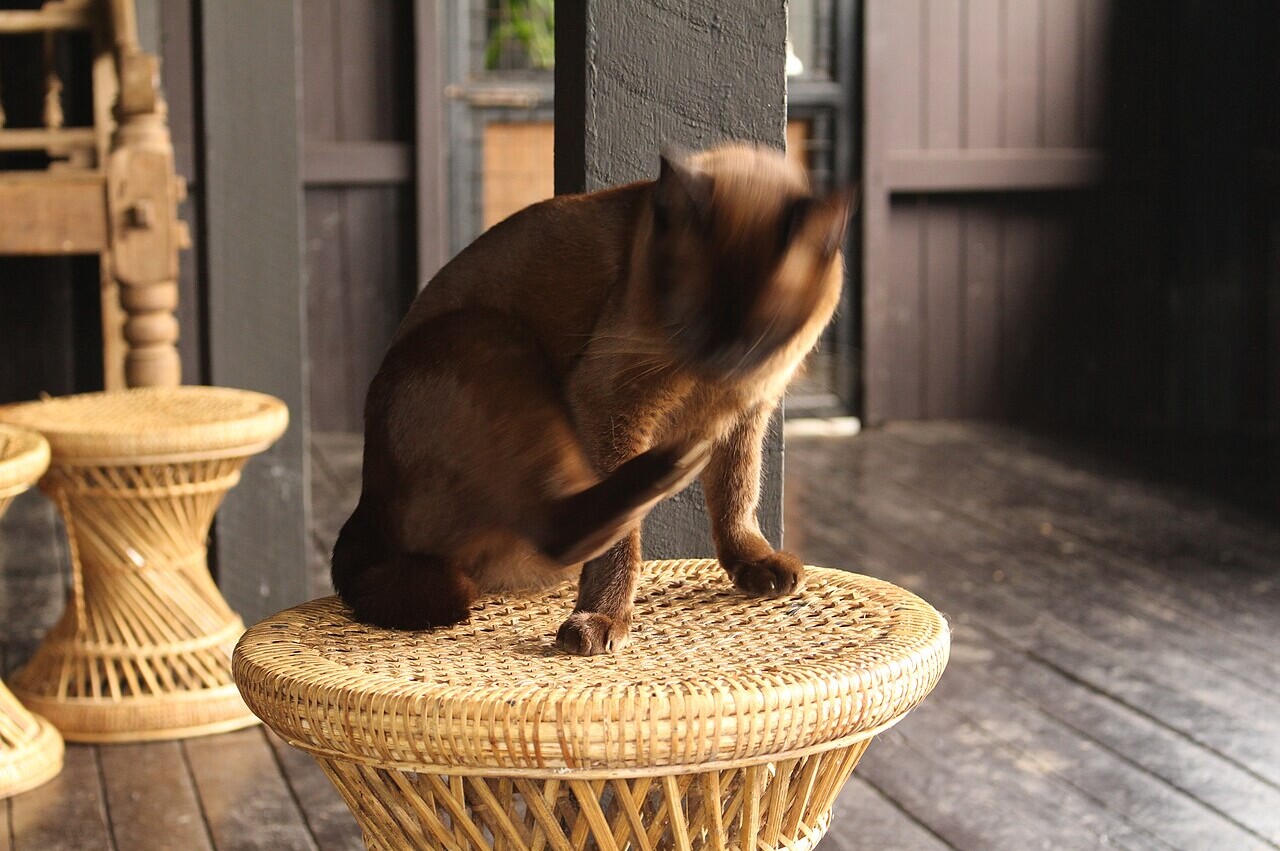
Burmese cats are one of Australia's favourite pedigree breeds — and for good reason. Compact, muscular, and wrapped in a sleek satin coat that practically glows, the Burmese is the kind of cat that walks into a room and immediately owns it. They're absurdly people-oriented, borderline clingy, and have a reputation for greeting their owners at the door like a dog that accidentally got reincarnated into a much more elegant body. They'll sit on your lap during work calls, supervise you in the kitchen, and genuinely sulk when you leave the house. But beneath that gorgeous exterior and magnetic personality, Burmese cats carry some serious breed-specific health risks that can hit the wallet hard. Diabetes mellitus — Burmese are up to 4 times more likely to develop diabetes than other cat breeds, and lifetime management costs can reach $10,000–$25,000+. Hypokalemia (dangerously low potassium levels) is an inherited condition in Burmese that can cause sudden muscle weakness and even collapse, costing $2,000–$8,000 to diagnose and manage. And orofacial pain syndrome, a neurological condition almost exclusive to Burmese, can leave your cat pawing at its face in distress. For a breed that typically costs $1,200–$3,000 from a registered breeder, the lifetime health costs can dramatically exceed the purchase price.
We compared plans from Australia's major pet insurers, quoting for a 3-year-old Burmese in Sydney, to find the best value cover for this beloved breed.
Last updated: March 2026
Quick Comparison: Top Providers for Burmese Cats
| Provider | Monthly Est. | Annual Limit | Excess | Benefit % | Hereditary Conditions | Waiting (Illness) | Our Take |
|---|---|---|---|---|---|---|---|
| Budget Direct ⭐ | ~$33–52 | Up to $25,000 | $100–$200 | 80% | ✅ Covered | 30 days | Best value — strong limits, cheapest comprehensive cover |
| Bow Wow Meow | ~$36–144 | Up to $30,000 | $0–$500 | Up to 90% | ✅ Covered | 30 days | Highest limit, GapOnly® claiming, no sub-limits |
| Pet Circle Insurance | ~$37–113 | Up to $10,000 | $0–$150 | Up to 90% | ✅ Covered | 30 days | Good mid-range, up to 90% benefit on top plans |
| RSPCA Pet Insurance | ~$35–65 | Up to $20,000 | $0–$200 | Up to 80% | ✅ Covered | 30 days | Solid cover, supports animal welfare |
| Pet Insurance Australia | ~$40–70 | Up to $20,000 | $0–$200 | Up to 80% | ✅ Covered | 30 days | 2 months free promo, breed-aware |
⚠️ Premiums based on a 3-year-old desexed male Burmese in Sydney (2000 postcode), quoted April 2026. Cat insurance is significantly cheaper than dog insurance. Your actual quote will vary by age, location, and cover level. Always get a personalised quote.
Why Burmese Cats Need Comprehensive Insurance
The Burmese is one of the most established cat breeds in Australia — they were among the first pedigree cats bred here, and Australian Burmese lines are recognised globally as distinct from their American and European counterparts. That deep breeding history has produced a confident, sociable, wonderfully low-maintenance companion, but it has also concentrated certain genetic health vulnerabilities that responsible owners need to plan for. The silver lining? Cat insurance is considerably cheaper than dog insurance, making comprehensive cover genuinely affordable even for a breed with Burmese-level health risks.
Common Burmese Cat Health Issues & Typical Vet Costs
| Condition | What It Is | Typical Cost |
|---|---|---|
| Diabetes Mellitus | Burmese cats are 3–4× more likely to develop diabetes than other breeds. Requires daily insulin injections and ongoing monitoring | $10,000–$25,000+ (lifetime: insulin, blood glucose monitoring, specialist visits) |
| Hypokalemia (Low Potassium) | Inherited condition causing episodic muscle weakness, neck ventroflexion, and potential collapse. Can appear suddenly | $2,000–$8,000 (diagnosis, emergency stabilisation, ongoing supplementation) |
| Orofacial Pain Syndrome | Neurological condition almost unique to Burmese — causes episodes of face/mouth pain, pawing at the face, self-mutilation. Poorly understood | $2,000–$6,000+ (neurological workup, pain management, ongoing medication) |
| Hypertrophic Cardiomyopathy (HCM) | The most common heart disease in cats. Burmese have elevated risk compared to mixed-breed cats | $3,000–$8,000+ (echocardiograms, ongoing cardiac medication) |
| Cranial Cruciate / Head Defects (Burmese Head Defect) | A congenital skull malformation seen in some American Burmese lines. Ethical breeders screen for this | $3,000–$10,000+ (specialist surgery if viable) |
| Flat-Chested Kitten Syndrome (FCKS) | Thoracic deformity in kittens — more common in Burmese than most breeds. Usually appears before adoption age | $1,000–$5,000 (splinting, supportive care, may require surgery) |
| Kidney Disease (CKD) | Chronic kidney disease risk increases with age — pedigree cats generally have higher incidence | $3,000–$10,000+ (lifetime management: fluids, prescription diet, monitoring) |
| Dental Disease | Periodontal disease and tooth resorption — common across pedigree cats, and Burmese are no exception | $1,000–$3,000 per dental surgery |
| Eye Conditions (Cherry Eye / Epiphora) | Tear duct and eyelid issues — Burmese facial structure can predispose to certain eye conditions | $800–$3,000 (surgery, ongoing management) |
| Endocrine Lipidosis | Linked to diabetes and obesity — Burmese are predisposed due to their metabolic tendencies | $2,000–$5,000 (hospitalisation, supportive care) |
Diabetes: The Burmese-Specific Time Bomb
If there's one condition that defines health risk in Burmese cats, it's diabetes mellitus. Multiple studies — including landmark Australian and Swedish research — have confirmed that Burmese cats are 3 to 4 times more likely to develop diabetes than the general cat population. In some studies, the prevalence is even higher. The genetic basis is well-established, though the exact mechanism involves both hereditary insulin resistance and environmental triggers (primarily obesity and indoor-only lifestyles).
Here's what diabetes management actually looks like financially:
- Diagnosis (blood panels, fructosamine, urine tests): $300–$800
- Insulin (ProZinc or Caninsulin): $80–$150/month
- Blood glucose monitoring supplies: $50–$100/month (home testing) or $200–$400/visit (vet curve)
- Specialist endocrinology consultations: $300–$600 per visit
- Prescription diet (e.g., Royal Canin Diabetic): $80–$120/month
- Regular check-ups (every 3–6 months): $150–$300 each
- Emergency vet visits for hypoglycaemic episodes: $500–$2,000 each
Over a Burmese's 15–18 year lifespan, a diabetic cat can easily generate $15,000–$30,000+ in management costs. And unlike a one-off surgery, diabetes is relentless — every month brings insulin costs, monitoring expenses, and the ever-present risk of a hypoglycaemic crisis that sends you to the emergency vet at 2am.
The pattern is similar to what we see with chronic asthma in Siamese cats and GI issues in Bengals — a manageable chronic condition that generates punishing cumulative costs over years.
Hypokalemia: The Silent Emergency
Hypokalemic polymyopathy is an inherited condition that's significantly overrepresented in Burmese cats. It causes dangerously low blood potassium levels, leading to:
- Episodic muscle weakness — your cat may suddenly be unable to walk or hold up its head
- Neck ventroflexion — the classic sign: head dropping towards the chest
- Respiratory muscle weakness — in severe cases, life-threatening
- Cardiac arrhythmias — low potassium affects the heart
An acute hypokalemic episode typically involves:
- Emergency vet visit: $500–$1,500
- IV potassium supplementation: $500–$1,000 (requires hospitalisation and cardiac monitoring)
- Blood panel diagnostics: $200–$500
- Ongoing oral potassium supplementation: $30–$80/month
- Regular monitoring blood tests: $150–$300 every 3–6 months
The condition is treatable — daily potassium supplementation often prevents recurrence — but that first emergency presentation can be frightening and expensive, and lifelong management adds up.
Detailed Provider Reviews
Budget Direct ⭐ Editor's Pick
Best for: Best value comprehensive cover for Burmese cats — strongest limits at the lowest price
Budget Direct delivers the best price-to-coverage ratio for cat insurance, and Burmese are no exception. Their Plus plan offers a $25,000 annual limit at prices that comfortably undercut most competitors' mid-tier options. For a breed where the primary financial risk is chronic illness management (especially diabetes), Budget Direct's comprehensive illness cover hits all the right notes.
Key features:
- Annual limit: Up to $25,000 (Plus plan)
- Benefit percentage: 80%
- $100 or $200 excess options
- 15% online discount
- Hereditary conditions covered (subject to PDS)
Real pricing (3yo Burmese, Sydney):
| Plan | Excess | Monthly |
|---|---|---|
| Essential | $200 | $32.71 |
| Essential | $100 | $36.34 |
| Comprehensive | $200 | $36.34 |
| Comprehensive | $100 | $40.38 |
| Plus | $200 | $47.24 |
| Plus | $100 | $52.49 |
Waiting periods:
- Accident: 2 days
- Illness: 30 days
- Cruciate: 6 months
- Pre-existing conditions: Not covered
Pros:
- Cheapest comprehensive cover with a $25,000 limit — extremely difficult to beat on value
- Simple, straightforward pricing with no hidden complexity
- $15,000 Comprehensive plan is cheaper than most competitors' basic cover
- Hereditary condition coverage means diabetes, hypokalemia, and HCM are covered
- $200 excess option drops premiums further — ideal for covering catastrophic costs
Cons:
- 80% benefit only — no option to increase to 90%
- Fewer customisation options than Bow Wow Meow
- Check PDS for sub-limits on chronic ongoing conditions like diabetes
- No GapOnly-style claiming at the vet
Get a Quote from Budget Direct →
Bow Wow Meow
Best for: The highest annual limit with no sub-limits — perfect for Burmese who may develop multiple concurrent conditions
Bow Wow Meow's $30,000 annual limit with no sub-limits is the ultimate safety net for a breed that can realistically develop diabetes, hypokalemia, and heart disease simultaneously. When your Burmese needs insulin management ($3,000+/year), potassium supplementation ($1,500+/year), and then throws in a dental surgery — you need an insurer that doesn't cap individual condition categories.
Key features:
- Annual limit: Up to $30,000
- Benefit percentage: Choose 60%, 70%, 80%, or 90%
- No sub-limits — every condition draws from your full annual limit
- GapOnly® claiming: Pay only the gap at participating vets
- Hereditary conditions covered (subject to PDS terms)
Real pricing (3yo Burmese, Sydney):
| Limit | Excess | Benefit | Monthly |
|---|---|---|---|
| $10,000 | $250 | 70% | $35.84 |
| $20,000 | $500 | 80% | $36.81 |
| $30,000 | $500 | 80% | $38.55 |
| $20,000 | $0 | 80% | $84.56 |
| $30,000 | $0 | 80% | $88.69 |
| $30,000 | $0 | 90% | $144.10 |
Waiting periods:
- Accident: 2 days
- Illness: 30 days
- Pre-existing conditions: Not covered
Pros:
- No sub-limits handles concurrent conditions beautifully (diabetes + hypokalemia + dental in the same year)
- $30,000 limit is the highest available — massive headroom for multiple chronic conditions
- GapOnly® is excellent for frequent diabetes-related vet visits
- 90% benefit option minimises out-of-pocket on expensive specialist treatments
- Highly customisable — choose your own limit, excess, and benefit percentage
Cons:
- Significantly more expensive than Budget Direct at comparable cover levels
- The $0 excess, 80% benefit combo costs $88.69/month — premium territory
- Best value is the $500 excess tier ($38.55/month for $30k limit) but that's a large excess per claim
- Lots of plan combinations can make choosing confusing
Get a Quote from Bow Wow Meow →
Pet Circle Insurance
Best for: Mid-range cover from a trusted pet brand with 90% benefit options
Pet Circle Insurance offers a solid middle ground for Burmese owners who want comprehensive cover without the premium price tag of Bow Wow Meow's top tiers. Their Plus and Top plans offer 90% benefit percentage, which is valuable for recouping more on expensive ongoing diabetes management costs.
Key features:
- Annual limit: Up to $10,000
- Benefit percentage: Up to 90% on top plans
- $0–$150 excess options
Real pricing (3yo Burmese, Sydney):
| Plan | Monthly | Limit | Excess | Benefit |
|---|---|---|---|---|
| Accident Only | $37.37 | $2,500 | $150 | 70% |
| Essential | $53.58 | $10,000 | $150 | 80% |
| Classic | $71.46 | $10,000 | $150 | 80% |
| Plus | $92.01 | $10,000 | $75 | 90% |
| Top | $112.90 | $10,000 | $75 | 90% |
Pros:
- 90% benefit on Plus and Top plans — pays more per claim than Budget Direct's 80%
- Low excess options ($75) reduce per-claim out-of-pocket costs
- Trusted pet brand with strong customer experience
- Good option if you want maximum per-claim reimbursement
Cons:
- $10,000 annual limit is substantially lower than Budget Direct ($25,000) and Bow Wow Meow ($30,000) — could be exhausted quickly with diabetes + concurrent conditions
- Top-tier plans are expensive relative to the $10,000 cap
- Budget Direct's Plus plan offers $25,000 limit for less than Pet Circle's Essential plan
- The math doesn't always work: 90% of claims against a $10k limit can be less useful than 80% against $25k
Get a Quote from Pet Circle Insurance →
RSPCA Pet Insurance
Best for: Reliable comprehensive cover that supports animal welfare
RSPCA Pet Insurance offers competitive coverage for Burmese cats at reasonable pricing. A portion of your premium supports RSPCA animal welfare programs — meaningful if you care about the broader ecosystem of animal wellbeing beyond your own pet.
Key features:
- Annual limit: Up to $20,000
- Benefit percentage: Up to 80%
- Portion of premium supports RSPCA
Pros:
- Supports RSPCA animal welfare programs with every policy
- Competitive cat insurance pricing
- Comprehensive hereditary condition coverage
- Good waiting period terms
Cons:
- Fewer online claiming tools than some competitors
- Not the absolute cheapest option for the cover level
- We couldn't obtain live quotes at time of review (website maintenance)
Get a Quote from RSPCA Pet Insurance →
Pet Insurance Australia (PIA)
Best for: Breed-aware cover with promotional savings
PIA's 2 months free promo makes this a compelling value option for Burmese owners. Their breed-specific knowledge extends to cats, and their $20,000 annual limit is adequate for most feline health scenarios — though Burmese owners with diabetes concerns might prefer a higher limit.
Key features:
- Annual limit: Up to $20,000
- Benefit percentage: Up to 80%
- Hereditary conditions covered (subject to PDS)
- 2 months free promotional pricing
Pros:
- 2 months free saves meaningfully over the policy's first year
- Australian-owned with genuine breed knowledge
- $20,000 limit handles most cat conditions comfortably
- Good customer reviews and straightforward claims process
Cons:
- Lower limit than Budget Direct's Plus plan ($25,000)
- No GapOnly-style claiming
- Pricing not available for direct comparison at time of review
Get a Quote from Pet Insurance Australia →
How We Compared These Plans
We evaluated each insurer based on criteria specifically relevant to Burmese cat owners:
- Hereditary condition coverage — Diabetes, hypokalemia, and orofacial pain syndrome all have genetic links in Burmese; coverage is non-negotiable
- Chronic/ongoing condition coverage — Diabetes is a lifelong management condition; the policy must cover the same condition year after year
- Annual limits & sub-limits — Diabetes management alone can generate $3,000–$5,000 annually; limits matter more than usual when chronic conditions stack
- Premium cost — Cat insurance is affordable; the key question is how much additional cover you get by stepping up
- Claiming experience — Ease of process for frequent diabetes-related visits and monitoring
- Customer reviews — Experiences from cat owners specifically
All quotes were obtained for a 3-year-old desexed male Burmese in Sydney (postcode 2000) in April 2026 on comprehensive/accident+illness cover.
What to Look for in Burmese Cat Insurance
✅ Must-Haves
- Hereditary & congenital condition coverage — Diabetes, hypokalemia, HCM, and orofacial pain syndrome all have genetic components in Burmese. This is the single most important feature for this breed
- Ongoing condition coverage — Diabetes and hypokalemia are chronic, lifelong conditions. Your policy must cover the same condition year after year without caps or resets
- No sub-limits on specific conditions — A policy that caps endocrine-related claims at $2,000/year is useless when annual diabetes management alone exceeds that
- Adequate annual limit ($15,000+) — Diabetes plus one concurrent condition can easily exhaust a $10,000 limit. We recommend $15,000 minimum for Burmese, ideally $20,000+
⚠️ Watch Out For
- Pre-existing condition exclusions — Insure your Burmese kitten as early as possible (8 weeks). Diabetes can develop from age 5+, but blood glucose abnormalities documented before insurance starts would be excluded
- "Pedigree cat" surcharges — Some insurers charge more for pedigree breeds. Our quotes show Burmese premiums are modest compared to dog breeds, but compare carefully
- Endocrine condition sub-limits — Some policies cap diabetes-related claims below the annual limit. Read the PDS carefully
- Dental exclusions — Many policies exclude dental entirely. Burmese can develop periodontal disease; check the PDS
- Waiting periods for illness — Standard 30-day illness waiting periods apply everywhere. Don't delay insurance expecting to get cover "when you need it"
💡 Pro Tips for Burmese Cat Owners
- Insure from kitten age — Diabetes typically develops from age 5 onwards, but HCM, hypokalemia, and orofacial pain syndrome can appear earlier. Get cover before any vet records exist
- Weight management is critical — Obesity is the single biggest modifiable risk factor for diabetes in Burmese. Keeping your cat at a healthy weight doesn't just prevent suffering — it prevents insurance-complicating pre-existing conditions
- Ask your breeder about genetic testing — Reputable breeders should know their lines' diabetes and hypokalemia history. If your breeder has no health testing records, insurance is even more essential
- Learn to recognise hypokalemia signs — Sudden weakness, head dropping, reluctance to move. Quick vet intervention prevents escalation to a much more expensive emergency
- Cat insurance is cheap — go comprehensive — The price difference between accident-only and comprehensive cover for cats is often just $15–$40/month. For a breed with Burmese-level genetic risks, comprehensive is the only sensible choice
- Budget for regular vet checks — Annual blood panels can catch early diabetes markers (elevated fructosamine, glucose) before full-blown diabetes develops. Early detection means better outcomes and cleaner insurance claims
- Indoor enrichment matters — Burmese are extremely social and prone to stress-related conditions. A stimulated, happy Burmese is a healthier Burmese — and a cheaper one to insure over time
Burmese vs Other Cat Breeds: Insurance Costs Compared
Wondering how Burmese insurance stacks up? Here's how the numbers compare across our reviewed cat breeds:
| Breed | Cheapest Comprehensive | Mid-Range | Risk Profile |
|---|---|---|---|
| Burmese | ~$33/mo | ~$47–52/mo | Diabetes, hypokalemia, orofacial pain syndrome |
| Siamese | ~$32/mo | ~$47–60/mo | Amyloidosis, asthma, cancer |
| Bengal | ~$30/mo | ~$45–55/mo | HCM, GI issues, PRA |
| Ragdoll | ~$30/mo | ~$45–55/mo | HCM, kidney disease |
| British Shorthair | ~$28/mo | ~$40–50/mo | HCM, kidney disease |
| Maine Coon | ~$30/mo | ~$45–55/mo | HCM, hip dysplasia, SMA |
Burmese premiums are in line with other pedigree cats — slightly higher than domestic shorthairs but genuinely affordable compared to dog insurance. The bigger consideration is breed-specific coverage quality: make absolutely sure diabetes and hereditary endocrine conditions are included in your policy.
Frequently Asked Questions
How much does pet insurance cost for a Burmese cat in Australia?
Expect to pay between $33 and $113 per month ($396–$1,356/year) for comprehensive cover, depending on age, location, and plan level. Budget Direct offers the best value starting from around $33/month for their Essential plan, while Bow Wow Meow's top-tier $30,000 limit plans range from $39–$144/month. Cat insurance is significantly cheaper than dog insurance across all breeds, making comprehensive cover very accessible for Burmese owners.
Does pet insurance cover diabetes in Burmese cats?
Yes — most comprehensive policies cover diabetes mellitus as long as it develops after the waiting period (typically 30 days for illness). Diabetes is classified as an illness, and hereditary/genetic predisposition doesn't exclude it from cover — it just means the condition is expected. The crucial factor is ongoing condition coverage: ensure your policy covers diabetes year after year, as it's a lifelong management condition.
Does pet insurance cover hypokalemia in Burmese cats?
Yes — comprehensive policies cover hypokalemia and hypokalemic polymyopathy as an illness, provided symptoms first appear after the waiting period. This includes emergency stabilisation, hospitalisation, and ongoing potassium supplementation. Ensure your policy covers hereditary conditions, as hypokalemia in Burmese has a well-established genetic basis.
Is pet insurance worth it for a Burmese cat?
Without question. Burmese are predisposed to several expensive conditions — diabetes ($10,000–$25,000+ lifetime), hypokalemia ($2,000–$8,000), HCM ($3,000–$8,000+), and orofacial pain syndrome ($2,000–$6,000+). With comprehensive cover starting from just $33/month, insurance is one of the smartest investments you can make for this breed. Our detailed guide on whether pet insurance is worth it breaks down the maths for all breeds.
What's the best age to insure a Burmese cat?
As early as possible — from 8 weeks. While diabetes typically develops from age 5 onwards, hypokalemia and orofacial pain syndrome can appear at any age, and HCM can develop in younger cats. Early insurance ensures nothing becomes pre-existing before you're covered. Every vet visit before insurance creates potential exclusions.
Are Burmese cats more expensive to insure than regular domestic cats?
Only marginally. Burmese are classified as a pedigree breed, which typically adds a modest premium compared to domestic shorthairs — perhaps $3–$8/month more. Our data shows Burmese premiums are virtually identical to Siamese and Bengal cats. Given their significantly higher diabetes risk compared to mixed-breed cats, the small premium increase is absolutely justified.
Do Burmese cats have a lot of health problems?
Burmese have a moderate-to-high number of breed-specific health predispositions, with diabetes being the most significant. They also face risks for hypokalemia, orofacial pain syndrome, HCM, and dental disease. However, they're a robust, long-lived breed (15–18 years on average) and many Burmese live healthy lives with minimal issues — especially when kept at a healthy weight and given appropriate veterinary care.
What's the average lifespan of a Burmese cat?
Burmese cats typically live 15–18 years in Australia with good care — among the longest-lived cat breeds. Some Burmese reach their early twenties. This longevity is a wonderful thing, but it also means more years where chronic conditions like diabetes can develop and accumulate costs. A 10-year diabetes management plan at $300/month in insulin, monitoring, and vet visits totals $36,000.
The Bottom Line
For Burmese cat owners, Budget Direct is our top recommendation — their Plus plan offers a $25,000 annual limit with 80% benefit at just $47–52/month, delivering the best balance of coverage and affordability. For a breed where the primary financial threat is chronic illness (especially diabetes), Budget Direct's comprehensive illness cover delivers where it counts at a price that makes insurance a no-brainer.
Bow Wow Meow is the premium choice if you want maximum protection — their $30,000 limit with no sub-limits is unmatched, and the GapOnly® claiming system is ideal for frequent diabetes-related vet visits and monitoring appointments. The $500 excess tier ($38.55/month for the $30k limit) is genuinely competitive value within the BWM range.
Pet Insurance Australia (with 2 months free) and Pet Circle Insurance (with 90% benefit options) are solid alternatives depending on whether you prioritise promotional savings or per-claim reimbursement rates.
The bottom line for Burmese owners is straightforward: this breed is affectionate, long-lived, and genetically loaded for diabetes. A $33–52/month insurance policy protects you against five-figure lifetime vet bills from diabetes management, emergency hypokalemia episodes, or heartbreaking cardiac disease. With Burmese cats routinely living 15–18 years, comprehensive insurance isn't a luxury — it's the cost of responsible ownership for one of Australia's most lovable breeds.
Related guides:
- Best Pet Insurance for Siamese Cats — another pedigree cat with significant genetic health risks
- Best Pet Insurance for Bengal Cats — HCM and genetic predisposition overlap with Burmese
- Best Pet Insurance for Ragdoll Cats — HCM risks are relevant across pedigree cat breeds
- Best Pet Insurance for British Shorthairs — another popular pedigree cat with cardiac risks
- Best Pet Insurance for Maine Coons — large pedigree cat with HCM predisposition
- Is Pet Insurance Worth It in Australia? — the full cost-benefit breakdown
- How Much Does Pet Insurance Cost? — pricing across all breeds and species
- Pet Insurance & Pre-Existing Conditions — what counts and what doesn't
Pet Cover Guide is reader-supported. When you click our links, we may earn a commission at no extra cost to you. This doesn't influence our ratings — we recommend what we'd choose for our own pets. Read our full editorial policy.
Disclaimer: This article is general information only and does not constitute financial advice. Always read the Product Disclosure Statement (PDS) before purchasing any insurance product.